Loading...
← Back to Projects
Live Productvectorpaths.com ↗
VectorPaths
A production-grade VCE Mathematics exam prep platform
React 19Express + tRPCPostgreSQLStripeDrizzle ORM
Live
Product
2,138+
Questions
6
Topics
Stripe
Payments
The Problem
As a VCE student, I spent equal time on every topic — only to realize after the exam that most marks came from a few core areas.
📚
Textbooks treat all topics equally
Students don't know what actually matters on the exam.
❌
Question banks only track right/wrong
Can't identify where the thinking broke down.
👨🏫
Teacher experience can't scale
Expert judgment stays locked in individuals.
The Algorithm
The real challenge isn't content — it's ranking. Which question helps this student most right now?
What Students See
/topics | /q/{id} | /me
What Matters
topic_weights + tier + backtest
What Happened
questions | topics | solution_steps
Strategic Score
Composite ranking: frequency (25%) + marks (30%) + difficulty (20%) + dependency (15%) + trend (10%). Recent years weighted higher to capture curriculum shifts.
Backtested against 20 years of VCE data — R² = 0.87
LLM Annotation Pipeline
Each question annotated into 9 structured tables via Claude API: skill type, concept hierarchy, difficulty (logic chains, calc load, novelty), and risk categories.
Why statistical over ML? Teachers need to see why a concept ranks high. Interpretability wins in education.
Tech Stack
Frontend
React 19TypeScriptTailwind CSS 4shadcn/uitRPC clientRechartsMathJax
Backend
Express 5.2tRPC 11Drizzle ORMZodJWT + bcryptSentry
Database
PostgreSQL (Supabase)Drizzle migrationsRow-level security
Payments & Deploy
Stripe (checkout, webhooks)Vercel (CDN)Render (API)AWS S3
Security & Quality
A real product handling payments needs real security — not an afterthought.
✓
JWT sessions + bcrypt password hashing
✓
CSRF protection on all mutations
✓
XSS sanitization + HTTP security headers
✓
Rate limiting + brute-force protection
Gamification System
XP & Leveling
100-level progression system with Explorer ranks (Space Cadet to Galaxy Legend)
Streaks
Consecutive study day tracking with freeze system (1 free/week) and loss notifications
Achievements
Concept mastery badges, streak milestones, accuracy achievements
Analytics
Topic mastery heatmap, accuracy charts, study time tracking, progress visualization
3-Tier Access Model
Free
Practice by year, 3 solutions/day
Scanned
+ Practice by concept, unlimited brief solutions
Premium
+ Skill variants, detailed solutions, mistake notebook
The Product
1
Goal-Driven Entry
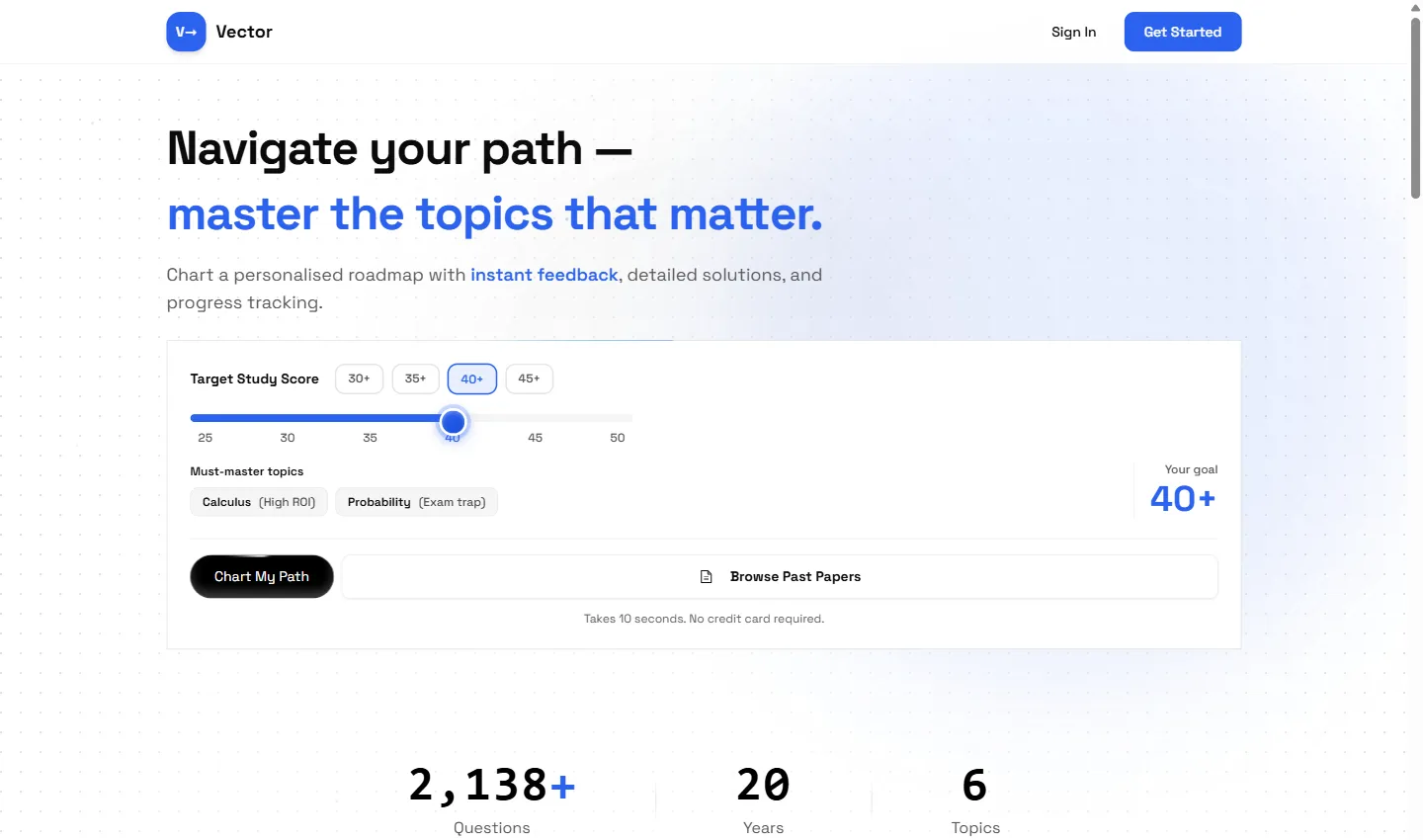
Students set their target study score — the system adapts everything to their goal.
2
Structured Content
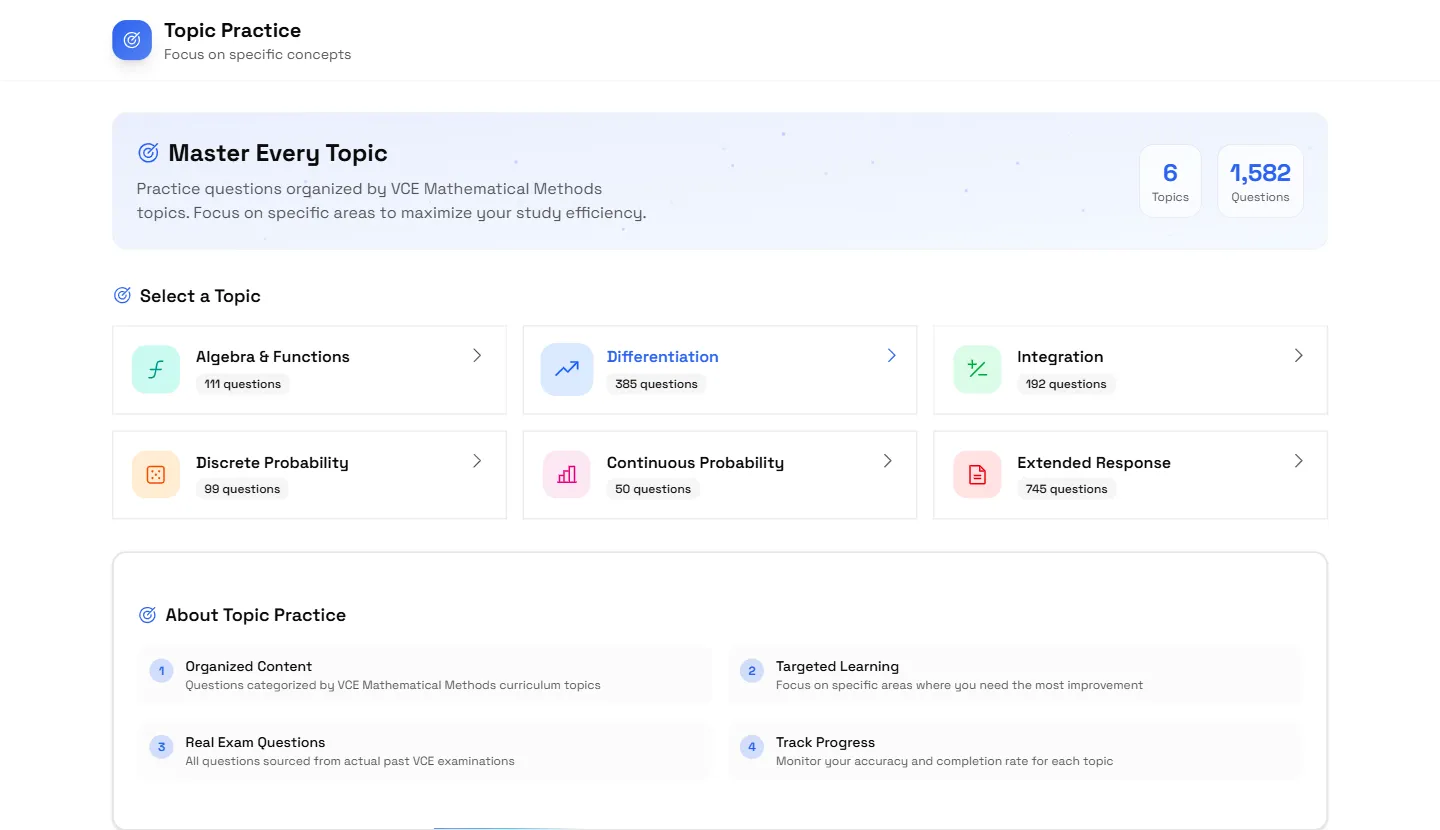
2,138 real VCE exam questions organized across 6 core topics with concept hierarchy.
3
Annotation-Driven Practice
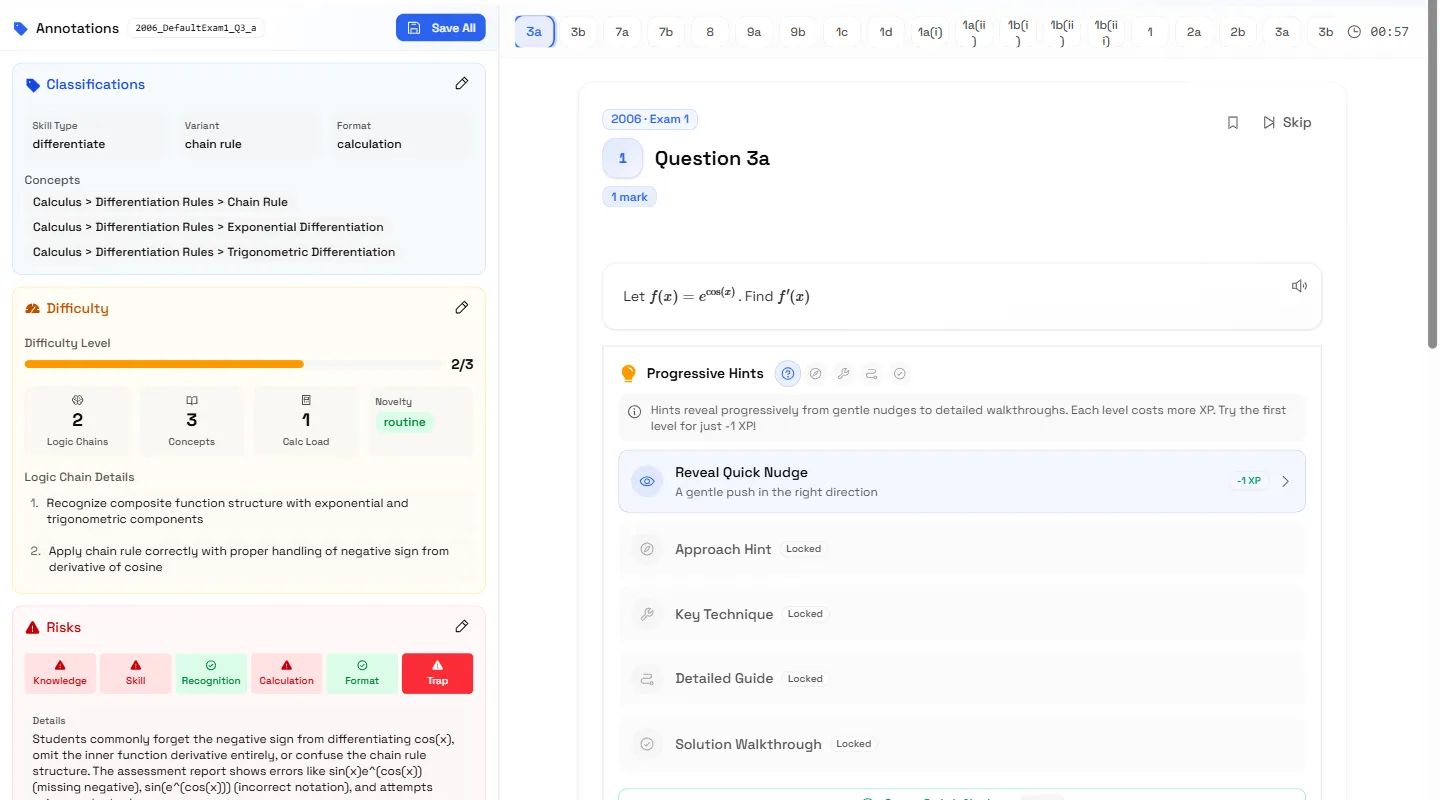
Behind every question: structured annotations that tell the system what skill is tested, how hard it is, and where students go wrong.
What I Learned
Interpretability beats accuracy in education
I chose a statistical model over black-box ML for topic weights. Teachers need to see why a concept ranks high — a model people trust beats one that's 5% more accurate but nobody understands.
Payments change how you think about product
Adding Stripe with 3-tier access forced me to answer: what's worth paying for? That question reshaped the entire feature set and taught me more about product strategy than any textbook.
LLM output needs product-level schemas
Raw LLM output varies every run. I designed structured annotation schemas that turned unreliable AI extraction into a repeatable pipeline — a product design problem, not just an engineering one.
The product is the constraint, not the code
20 years of exam data could support endless features. The real skill was deciding what not to build — keeping the product focused on what actually helps students score higher.
"The complexity lives in the system. The simplicity lives in the experience."